Pete Pastides · Mindset
Why I'm the Machine, Not My Tech
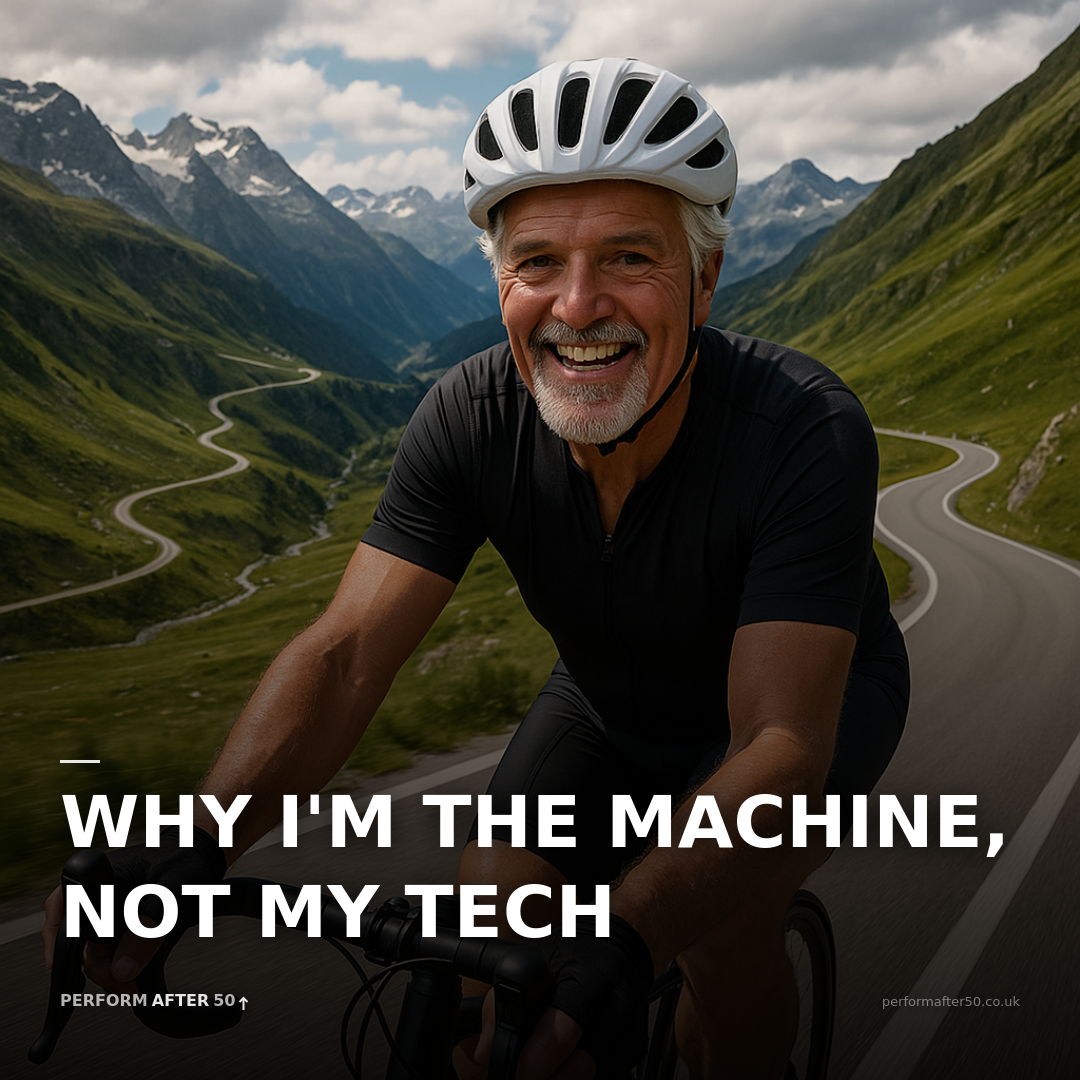
Looking back at my early training days, I can almost laugh at the person I was—standing in sports stores, mesmerized by the latest gadgets promising to unlock my hidden athletic potential. Coming from a technology background, I naturally gravitated toward data and innovation. If there was a device that could measure it, track it, or optimise it, I wanted it.
The Gadget Obsession
My collection grew rapidly: heart rate monitors that could detect the slightest variation, power meters that measured every watt, GPS watches that tracked routes down to the meter, recovery devices that promised faster healing, sleep trackers that analysed every REM cycle. I was convinced that more data equaled better performance, that the next algorithm or sensor would reveal some secret about my body that I couldn't access through experience alone.
Each morning, I'd strap on multiple devices, sync apps, and spend precious training time analyzing numbers instead of simply running, cycling, or swimming. I was so focused on what the technology told me that I began to doubt my own instincts about how my body felt.
The Awakening
The shift happened gradually, through years of training and competing at world championships. I began noticing that my best performances often came when I trusted my body's signals over what my devices recommended. There were mornings when every metric suggested I should push harder, but my legs whispered otherwise—and listening to that whisper prevented injury. There were training sessions where the data looked mediocre, but I felt powerful and connected to my movement.
I realised I had been outsourcing my body awareness to machines.
Finding the Balance
This doesn't mean I've abandoned technology entirely. I still use devices that provide valuable insights and help track long-term progress. But now they serve me, not the other way around. The relationship has flipped. Technology amplifies my training; it doesn't replace my intuition.
At our age, we possess something younger athletes are still developing: decades of body awareness and life experience. We know the difference between good discomfort and warning pain. We understand our patterns, our rhythms, our responses to stress and recovery. This wisdom is our competitive advantage, and no gadget can replicate it.
The Real Machine
The machine isn't strapped to my wrist or mounted on my bike. The machine is me—my cardiovascular system, my muscles, my mind, my accumulated experience. Technology is simply the tool that helps me understand and optimise this incredible biological system I've been given.
Now when I train, I listen first to my body, then consult the data for context and confirmation. This approach has led to more consistent training, fewer injuries, and ultimately, better performance. The most sophisticated technology I own is my ability to tune into what my body needs and respond accordingly.